
木瓜视频 木瓜视频
一个新单词“Sannongology”的诞生:中国标识性概念“三农学”海外发布全文
2026-08-09Sannongology
A Framework for Rethinking Social Change and the State in Rural China
ZHU Xinkai
Renmin University of China
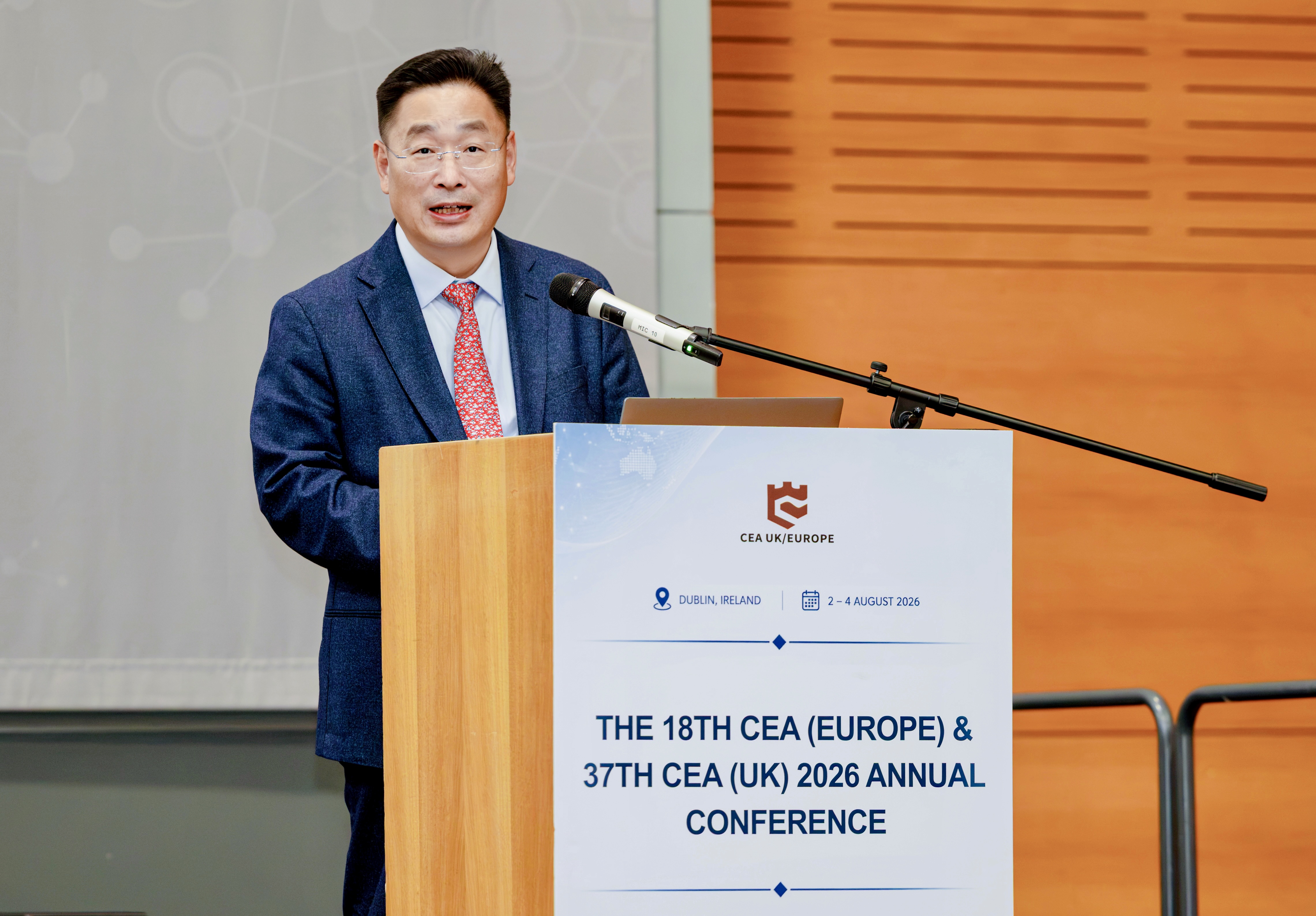
Ladies and gentlemen, I’d like to start with one word. The word is the very center of all issues in China. Everyone who wants to understand China has to start with this word. In China, this word is sannong.
This word, sannong, has no single-word equivalent in English, or, as far as I know, in any European language.
It is built from three ordinary words. Nongye is the agricultural economy. Nongcun is rural society. Nongmin is the farming population and their livelihoods. Each of the three begins with the same character, nong, meaning “agriculture” or “the agrarian.” So Chinese can gather all three under one head and say sannong, literally “the three nongs.” It is a small thing to do in the language, and it turns out to matter a great deal.
In English the best you can manage is a list: “agriculture, rural areas, and farmers.” But a list is not a concept. It is three things standing next to each other. Sannong is one noun, and it names the three as a single object.
You might take this for a small accident of Chinese word-formation, and nothing more. I want to spend the next half hour persuading you otherwise. The word points to something real about how modernization works, something our disciplines, arranged as they are, have a hard time seeing. And I want to describe an effort to build a proper theoretical framework on top of it, a project we have started to call, in English, Sannongology.
Let me start with why the word is worth taking seriously.
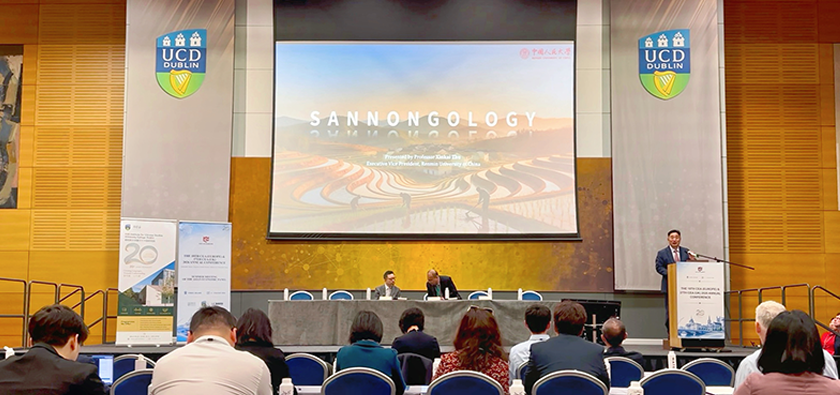
Three problems, or one?
Consider a country in the early stages of modernization. Almost at once it runs into difficulties that rise from the countryside. I will name three. At first they look like three separate problems, the kind you would hand to three separate specialists.
The first concerns agriculture as an economy. As incomes rise and cities grow, people want more food and better food. But farms in a developing country are often not ready for that demand; the technology, the inputs, the infrastructure are not yet in place. Supply lags, prices rise, and rising food prices press on wages, on industry, on the whole project of growth. A problem, it would seem, for the agricultural economist.
The second concerns rural society. To modernize, a state usually has to reach deeper into the countryside, drawing resources out of it and reorganizing it as it goes. Yet the countryside has always held a great deal of a nation’s life: its customs, its reciprocity, its informal safety nets. Modernization presses on all of that. Polanyi called an upheaval of this kind “the great transformation.” A problem, it would seem, for the sociologist.
The third concerns farmers as people. Modernization can carry farmers into it or push them to its margins, leaving them without the skills it rewards, or without the land and the rights their security rests on. Whether the majority of a population is drawn into modernization or shut out of it does much to determine the shape modernization takes. A problem, it would seem, for the political scientist.
Three problems, three specialists. And here is the point of the whole talk. You cannot solve them one at a time, because they are not three problems. They are three faces of one.
Here is a simple thought experiment.
Suppose a government surveys all this and concludes that the real bottleneck is agriculture, and in particular that farms are too small. The diagnosis is not unreasonable; small, fragmented plots are hard to mechanize and hard to invest in. So the government acts on the farm problem. It opens the countryside to large capital, encourages consolidation, and lets bigger operators take over the land. Output may well rise.
Return in ten years and see what else has happened. Villages have hollowed out. Farmers who lost their land have moved to the cities, but without the skills the cities reward, and so they gather at the bottom. Rural poverty has set into a form that is very hard to reverse. And the social and political ground beneath the whole effort has shifted.
A policy aimed squarely at the agricultural problem has produced a rural crisis and a farmer crisis. The three were bound together all along.
You cannot optimize one of the three while holding the other two still. Press here, and it surfaces there. This is the situation a word like sannong is built for. It refuses to let you treat the three apart, because in the world they were never apart.
One more thing is worth noticing. This object, agriculture and countryside and farmers held together, is not merely one sector among many. It sits at the hinge of modernization. It is among the main places where a country’s transformation is worked out, and among the main places where the cost of that transformation is paid. How a country handles its sannong does much to decide what kind of country it becomes.
Where the word came from
So where did the word come from? The history matters, so let me be precise.
It was not handed down as a slogan. It grew out of fieldwork in the 1980s and 1990s, out of scholars going into villages and noticing something.
By the mid-1980s, China’s household responsibility reform had run its course, and a cluster of difficulties surfaced more or less together. Grain output plateaued. The burdens on farmers grew. Rural public services weakened, and rural incomes stalled. Researchers doing village surveys began to see that these were not unrelated troubles but one: agriculture, the village, and the farmer were bound up with each other, and bound up in turn with the country’s larger institutions. By the early to mid-1990s the term sannong had entered the scholarly literature. Only afterward did it pass into policy. Since 2004, the government’s first major document of each year, the “Number One Document,” has been devoted to sannong.
The sequence is worth holding onto: fieldwork first, then the concept, then policy. The concept was a genuine piece of scholarly work, an attempt to name what researchers were finding on the ground. Writing about the natural sciences in the nineteenth century, Engels described moments like this as “a revolution in terminology.” A science coins a new term, he argued, precisely when it has discovered a new object; the word is the evidence that something real has come into view. Sannong was a revolution of just that kind, in the study of modernization.
Why a word was not enough
And yet the project I want to describe exists because of a difficulty.
The revolution stopped halfway.Sannong became a term everyone used and almost no one theorized. It named its object beautifully, and then it stayed a name. It never grew into a framework, into a set of concepts, a method of analysis, a theory.
Part of the reason lies in how modern scholarship is organized. We are all trained inside disciplines, and disciplines specialize; that is their strength. But specialization carries a cost, and objects like this one pay it. Agricultural economics takes the farm. Development economics takes another piece. Rural sociology takes the village, political science the peasant. Each does excellent work on its part. But the whole, the thing sannong was coined to hold together, falls into the space between the disciplines, where no one is quite responsible for it.
I want to put this carefully, because it is not a complaint against any one tradition, and certainly not against Western scholarship, from which I have learned an enormous amount. It is a remark about the structure of a divided knowledge. When you cut a connected object along disciplinary lines, you tend to lose precisely its connections. How agriculture, society, and the farmer act on one another belongs to no single field, and so it goes largely unstudied.
That is the gap. Filling it is the task.
From a word to a framework: the first pillar
How, then, do you finish a terminological revolution? You give the word a theory. That is what Sannongology sets out to do, and it rests on two pillars. I will take them in turn.
The first pillar is a system of analytical categories.
The challenges of sannong, as the thought experiment suggested, run across many dimensions at once, so we need a disciplined way of naming those dimensions. Sannongology proposes seven: the mode of production; property rights; markets; region; human–nature relations; state–society relations; and nation–world relations.
A word, first, about what this list is not, because a list of categories invites misunderstanding.
It is not a checklist, and it is not a set of laws. Sannongology does not hold that large-scale industrial agriculture must everywhere replace the small farm, or that a given kind of production always dictates a given kind of property right. Claims of that sort, where they are true, are things one discovers in a particular place and time. They are conclusions of research, not its premises, and they may come out quite differently in another country or another century.
The seven are better understood as a frame of reference, a coordinate system. They tell you where to look. More than that, they insist that what matters is not the categories taken singly but the interactions among them: how a shift in the mode of production works its way through property, through markets, through the relationship to nature, and how these tensions build and move over time. The real work is to trace those interactions in a given case and to identify which tension, at a given moment, is doing the most to drive the system.
This is demanding work, and it is not new. It is the work Marx was doing when he read the logic of capital as the engine of European social change, and the work Weber was doing when he traced the affinity between a religious ethic and a form of economic life. The frame does not hand you conclusions of that kind. It gives you the coordinate system in which such a claim can be stated clearly, argued carefully, and tested against the evidence.
One asymmetry deserves an honest word. Among the seven, the mode of production holds a certain analytical priority. Not because everything else is a mere reflection of it, but for a plainer reason: without material production there is nothing else to discuss. It is a sensible place to begin looking, and no more than that. A starting point, not a prediction of what you will find.
The second pillar: the state
The first pillar names the challenges. But challenges do not answer themselves; something has to act. That is the second pillar, and it is where China’s own experience has the most to offer.
The second pillar is a theory of the state as the agent that answers to sannong.
The traditions I mentioned tend, understandably, to view the rural from below, from the standpoint of the village and the farmer. That view is essential and I would not give it up. But it leaves a question open: what should a state that is seriously trying to modernize actually do about its sannong? Neither extract from it nor neglect it, but govern it well, in a way that serves the larger transformation. Sannongology tries to give a systematic account of that.
It reads state action through four elements.
The first is goals. Three recur in China’s experience: food security, economic performance, and social protection — that the country is fed, that the rural economy actually grows, and that the vulnerable are not left behind.
The second is channels, and here is the hinge that ties the framework together. The channels through which the state acts are exactly the seven categories of the first pillar. The same seven. They serve at once as the lens through which the problem is seen and as the levers by which the state reaches in to shape it. That is what makes this one framework rather than two.
The third is measures, the concrete things done along each channel. The fourth is mechanisms, the way all of it holds together over time, above all when the goals pull against one another.
The framework doing some work
Here is what the frame buys us, in two brief illustrations and then a word on mechanisms.
Take food security. Seen through the frame, China’s effort is not a yield problem met with a yield solution. It is a coordinated set of moves across several categories at once. Protecting farmland and clarifying land rights belongs to property rights. Building socialized services and integrating the grain supply chain belongs to the mode of production. Placing processing and industry in the main producing regions belongs to region. Building brands and adding value downstream, nearer the consumer, belongs to markets. No one of these works well in isolation; their power comes from being pursued together. This is what it looks like, in practice, to treat sannong as a single object rather than three.
Now take poverty. Here the frame surfaces something I find genuinely interesting and easy to miss. China’s approach to rural poverty was not only to build a safety net and catch people in it. It also leaned another way, toward creating commercially viable opportunities and letting rising earnings do much of the protecting, so that economic performance pulled social protection along with it. Around that ran two further moves: bringing firms and social organizations into the effort, through the state–society channel; and turning ecological assets into sources of income, by way of rural tourism and green development, through the human–nature channel. You may debate whether the balance was well struck. But you can see that it was a balance, a choice among competing goals, only if you hold a frame that shows those goals pulling against each other.
Which brings us to mechanisms. How does a system pursue three goals that genuinely conflict, feeding the country, growing the economy, protecting the weak, without one simply overriding the rest? Part of the answer, in the Chinese case, is a division of labor across levels of government. The center sets the hard constraints, a floor on farmland that may not be crossed, while localities keep real discretion over how to meet them, adapting the detail to their own conditions. The other part is a habit of experimentation: try a policy in a few places, learn from what happens, and scale up only what has worked. Students of comparative government have a good name for this, “experimentation under hierarchy.” It is among the more interesting features of the system, and the framework lets us describe it cleanly.
What Sannongology is — and is not
I will close by marking the boundaries of the claim, since a new word tends to draw more baggage than it can carry.
First, at this stage it is best understood as a research agenda with a theoretical core, a lens through which to look. It is open about method. Formal models and field experiments are welcome; so are case studies and qualitative fieldwork. What defines it is the questions it places at the center. It is, above all, an argument about agenda.
Second, it is not out to overturn the disciplines that came before it. It does not set out to discard or replace agricultural economics, development economics, rural sociology, or any of the fields that have long studied the countryside; it draws on all of them. The point is not that their work was wrong. The point is that a particular object, the rural taken whole and seen inside the larger process of modernization, sat in the gap between those fields and deserves a framework of its own.
Third, and this is the one I most want to be clear about, it is not a model for export. The framework hands no one a set of answers. It offers a disciplined way of looking for them. And what the looking turns up will differ enormously from place to place. In some countries the binding tension lies in property rights and deep-rooted social structure; in others, between large-scale farming and the natural environment; in others again, in a country’s dependence on the outside world through a single export crop. The same frame, different central tensions, different answers. That is the value of a frame of reference: it does not pretend to know the answer in advance.
I will end not with a conclusion but with the questions the framework comes down to, questions worth putting to any country, not only mine.
Is the rural one object, or three? If it is one, does your own field have a word for it, a way to hold it together? And if the state is the agent that must finally answer for it, do we yet have a good theory of what that agent should do?
Chinese scholarship produced the word. Turning it into a framework worthy of it is work that is only beginning, and it is work I would be glad to see many hands take up.
Thank you very much.
